Every signal that reaches a UK dish — a ferry's broadband link off the Norfolk coast, a card payment clearing through a data centre in Slough, a live feed from a stadium in Cardiff — has probably passed through a region of space that is getting crowded. Space debris is the reason insurers, regulators and satellite operators now spend serious money on a problem that barely existed when the first telecom satellites went up.
The short definition: space debris is any human-made object in orbit that no longer serves a useful purpose. Dead spacecraft, spent rocket stages, fragments from collisions and explosions, and the small hardware that gets shed along the way. It matters for UK telecom satellites because those spacecraft fly through the same orbital lanes — and because UK licensing now places firm obligations on operators to keep those lanes usable.
Where space debris comes from
Debris is not one problem. It is several, produced in different ways at different altitudes, and each source behaves differently.
- Dead satellites. Spacecraft that ran out of fuel, lost power or simply reached the end of their mission and were left in place.
- Spent rocket upper stages. The hardware that pushed a satellite into its final orbit often stays up there, sometimes for decades, with leftover propellant aboard.
- Fragmentation debris. Old batteries and pressurised tanks can explode years after launch. Deliberate destruction adds far more: anti-satellite tests and accidental collisions have produced thousands of trackable fragments.
- Mission-related objects. Payload fairings, separation bolts, lens covers, clamp bands and tether remnants released during normal operations.
- The small stuff. Paint flakes, insulation scraps and solid rocket motor slag. Individually trivial, collectively hard to track and quite capable of damaging a solar array.
Two events did more than any other to make the problem concrete. A Chinese anti-satellite test in 2007 destroyed an old weather satellite and left a long-lived cloud of fragments in low Earth orbit. In 2009, an active American communications satellite and a defunct Russian spacecraft collided over Siberia, creating another large debris field in a heavily used band. Both clouds are still tracked, and fragments from them still trigger collision warnings.
Why low Earth orbit is the hard part
Objects in low Earth orbit travel at roughly 7.5 kilometres per second. Encounters between two of them can be head-on, which pushes closing speeds past 10 kilometres per second. Energy scales with the square of speed, so a bolt the size of a fingertip carries the punch of a small explosion. A centimetre-scale object can disable a satellite; a ten-centimetre object can shatter it.
Tracking has limits. Objects above roughly ten centimetres are generally catalogued and watched. The band between one and ten centimetres — big enough to cause serious damage, too small to follow reliably — is the awkward gap. Operators can screen against what is known, but they cannot dodge what nobody can see.
That is the logic behind the cascade scenario named after the NASA scientist Donald Kessler: enough collisions in a dense band could generate fragments faster than they decay, leaving some altitudes unusable for generations. Nobody is predicting an immediate collapse. The concern is that some orbits get steadily more expensive to operate in, with more manoeuvres, more fuel spent, and shorter working lives.
What this means for UK telecom satellites
UK-facing telecom traffic is carried by two very different kinds of spacecraft.
Geostationary satellites
At around 35,800 kilometres, the geostationary belt is far quieter than low Earth orbit. Debris there is sparse and moves slowly in relative terms. The bigger issue is end-of-life disposal: a large satellite that runs dry in a valuable orbital slot is both a liability and a nuisance for everyone else. Standard practice is to raise it into a graveyard orbit above the belt and vent residual fuel and pressure so it cannot explode later.
These satellites are also expensive and built to last. Every avoidance manoeuvre burns propellant that would otherwise extend a fifteen-year mission, so operators weigh a small collision risk against a real loss of revenue. That trade-off is now part of routine fleet management.
Low Earth orbit constellations
Broadband constellations in the region of 1,200 kilometres face the opposite situation: thousands of satellites in a managed shell, frequent conjunction warnings, and automated manoeuvring as standard. Each burn costs orbital lifetime. A satellite that dodges too often needs replacing sooner, which changes the economics of a constellation.
For both cases, the knock-on effects reach beyond the spacecraft. Coverage commitments, service level agreements, insurance terms and financing all assume satellites keep working. A collision that destroys a satellite does not just remove capacity; it creates debris that threatens the rest of the fleet.
The rules UK operators work under
Operating a satellite from the UK requires a licence, granted under the Outer Space Act 1986 or the Space Industry Act 2018, with conditions set by the UK Space Agency. Those conditions cover debris mitigation, insurance, and what happens at the end of a mission. They are not decorative.
The international backdrop matters too. The Inter-Agency Space Debris Coordination Committee publishes mitigation guidelines, UN COPUOS has agreed long-term sustainability guidelines, and ISO 24113 sets out technical debris mitigation requirements. Common threads run through all of them:
- Passivate at end of life. Vent propellant, discharge batteries, and remove stored energy so the spacecraft cannot fragment.
- Dispose properly. Low Earth orbit spacecraft should re-enter within a defined period after the mission ends. The long-standing international guideline allowed 25 years; several regulators have since moved to a five-year target, and UK expectations have been tightening in the same direction. Geostationary satellites should be raised to a graveyard orbit.
- Assess conjunctions. Screen against tracked objects, act on warnings, and keep records of manoeuvres.
- Limit what you release. Design out the bits and pieces that separate during normal operations.
If you operate, invest in, or insure a satellite, check the current licence conditions and guidance directly with the UK Space Agency rather than relying on a summary — requirements have changed more than once in recent years, and legal and insurance questions are worth taking professional advice on.
What good operators actually do
Mitigation is unglamorous and mostly happens before launch. Engineers budget fuel for disposal from the start, choose orbits that clear themselves naturally through atmospheric drag, and pick materials that do not shed. Once in orbit, teams join shared space situational awareness services, exchange ephemeris data with other operators, and act on conjunction warnings early with small nudges rather than waiting for a dramatic last-minute burn.
The UK contributes to that picture through its own space surveillance and tracking work and the National Space Operations Centre, which issues collision warnings and re-entry alerts. Sharing data costs far less than losing a satellite.
Keeping an eye on the sky
If you buy satellite capacity, ask your supplier two questions: what is your end-of-life disposal plan, and how many collision avoidance manoeuvres did your fleet make last quarter? The answers tell you more about long-term reliability than most marketing material.
If you work in the sector or want to, the useful skills are astrodynamics, orbit determination, space situational awareness data handling and satellite operations — the day-to-day work that keeps debris from becoming someone else's emergency. And for everyone else, it is worth remembering that the quiet reliability of a broadband connection in the Highlands depends on a lot of careful housekeeping a few hundred kilometres overhead.
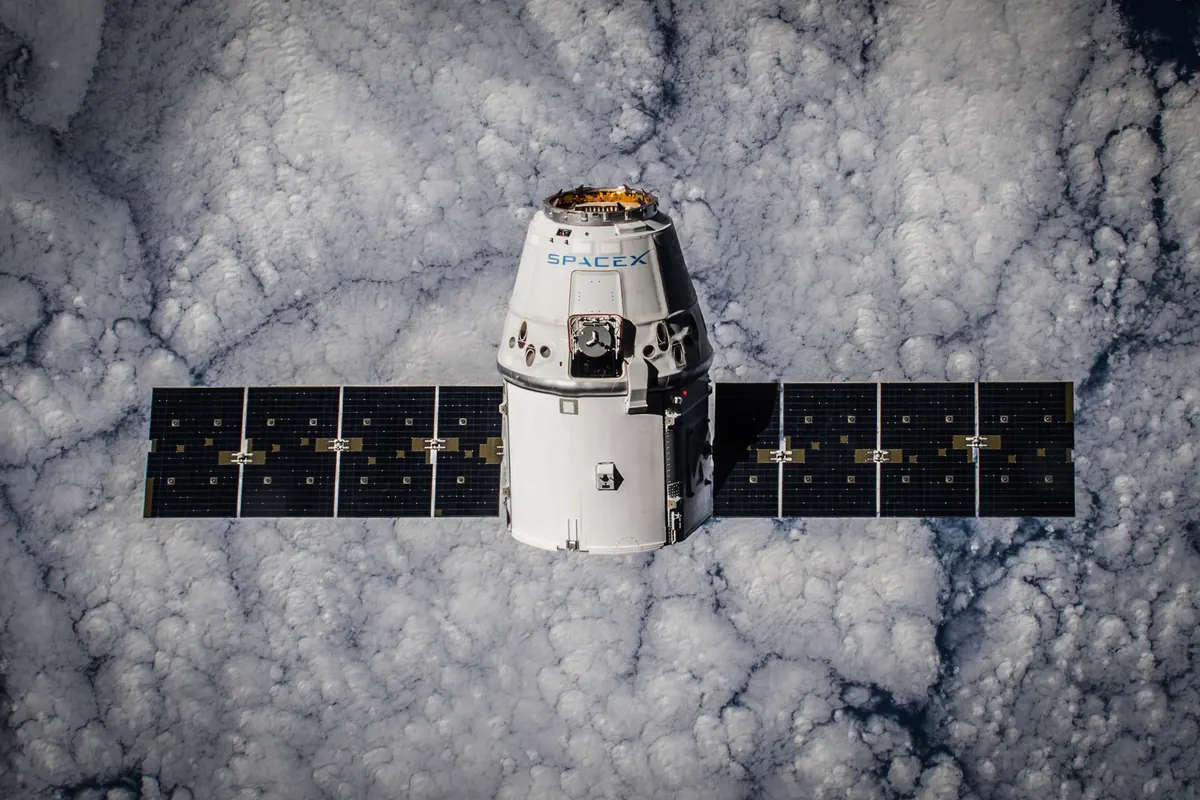
Photo: SpaceX / Pexels